



Introduction
TANSCIENT™ is a patented innovation in corrosion science that enables the safe and reliable refining of high total acid number (TAN) crude oils. Its superior phosphorus efficiency gives refiners enhanced control over corrosion protection and reduces risks associated with variations in naphthenic acid composition. TANSCIENT™ provides more effective passivation and continuous protection using up to 80% less phosphorus compared to competing high-temperature corrosion inhibitor (HTCI) products.
Key benefits include:
- Superior thermal stability and oil solubility
- Maximum surface reactivity for more effective protection
- Low acidity eliminates the need for a cooled parallel injection stream
- Phosphorus-minimized passivation, which is familiar and easy to implement
- Reduced risk of phosphorus fouling and catalyst contamination
Enhanced thermal stability and oil solubility
As detailed in our four patents and the March 2017 issue of Hydrocarbon Processing, TANSCIENT™ offers unprecedented phosphorus (P) efficiency due to its thermal stability and oil solubility. While conventional phosphate esters used in HTCI lose up to 75% of their phosphorus in less than 30 minutes at high temperatures, TANSCIENT™ retains over 90% of its phosphorus content after 2 hours. This exceptional stability and solubility are the results of esterification and ethoxylation processes that convert the phosphate ester into a polymeric triester.
Improved surface adsorption
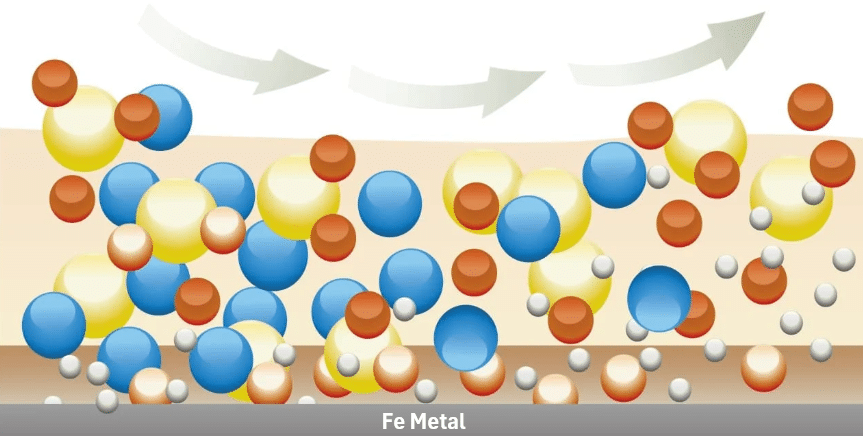
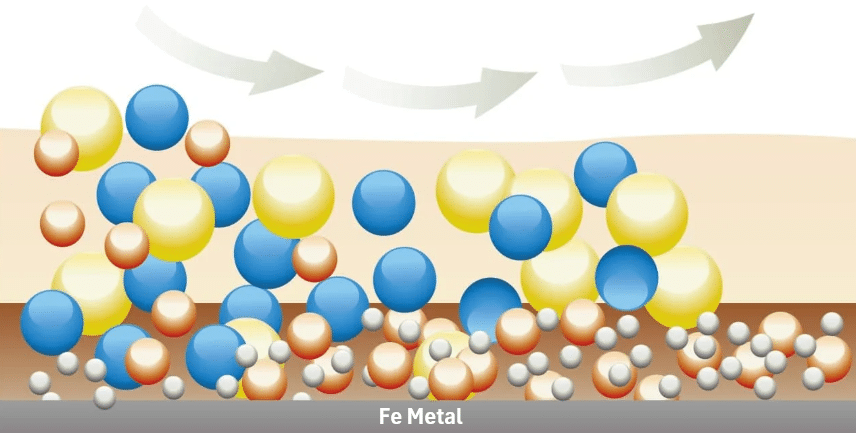
The innovation extends beyond producing a polymeric triester. The alcohol reacting with the ester is designed to provide high solubility through long hydrocarbon chains, and branching these chains enhances stability. This advanced chemistry allows polyphosphate to penetrate the FeS layer, forming an outer phosphate-rich layer that enhances protection through Fe polyphosphate and a more robust iron layer.
Treatment rate comparison
With higher phosphorus (P) efficiency, TANSCIENT™ requires less phosphorus to achieve the same level of corrosion protection. Traditional phosphate esters typically require treatment rates ranging from 0.7 ppm to 4 ppm P, while TANSCIENT™ only requires approximately 0.1 ppm to 0.5 ppm P for equivalent protection.
For refiners who intermittently process high-TAN crudes, TANSCIENT™ offers greater flexibility in building protective passivation layers with minimal impact on existing surface chemistry.
To learn more about this innovative technology, please contact Dorf Ketal.