



In a petrochemical plant, continuous and efficient process operation is essential for production and profitability. However, due to the complexity and scale of these operations, technical problems inevitably arise, compromising efficiency, safety, and the quality of the finished product. This is where advanced troubleshooting comes into play, focusing on solutions that utilize specialty chemicals.
WHAT IS TROUBLESHOOTING IN A PETROCHEMICAL PLANT?
Troubleshooting is the systematic process of identifying, analyzing, and resolving operational problems in an industrial plant. In a petrochemical facility, this involves investigating failures or irregularities in production processes, equipment, or control systems. The goal of troubleshooting is to find the root cause of the problem and implement effective solutions to restore the plant to optimal performance.
Many operational issues can be addressed through process optimization, equipment design adjustments, or metallurgical improvements. However, such approaches often have limitations, opening opportunities for solutions that involve the use of specialty chemical technologies. This article highlights the importance of troubleshooting focused on chemical specialty solutions in petrochemical plants.
THE IMPORTANCE OF TROUBLESHOOTING WITH CHEMICAL SPECIALTIES
The ability to perform effective troubleshooting using chemical specialty products is crucial in petrochemical operations for several reasons:
1. Minimizing Unplanned Shutdowns: Unresolved problems can lead to costly unplanned shutdowns. Rapid identification and correction through chemical-based solutions help avoid production interruptions.
2. Safety: Operational issues can pose significant risks to worker safety and the environment. Effective troubleshooting with chemical specialty solutions ensures that such risks are identified and mitigated promptly.
3. Product Quality: Process deviations can affect the quality of the final product. Applying specialty chemical solutions enables quick resolution of these issues, maintaining high quality standards and product specification compliance.
Operational Efficiency: Rapid problem-solving allows the plant to operate at maximum efficiency, reducing waste and improving overall productivity.
DORF KETAL’S CAPABILITY IN ADVANCED TROUBLESHOOTING FOR COMPLEX PROBLEMS
At Dorf Ketal, we understand the critical importance of advanced troubleshooting in petrochemical plants. Our approach combines decades of experience, specialized knowledge, state-of-the-art chemical solutions, and a team of highly qualified professionals.
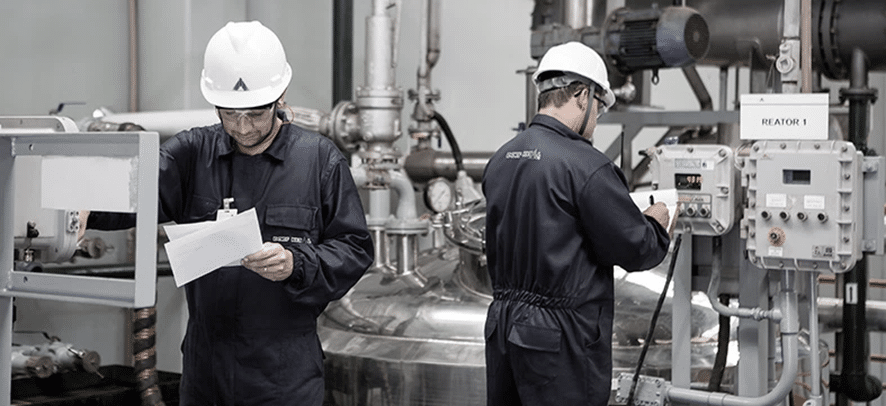
1. Expertise and Specialized Knowledge: Our team includes specialists with extensive experience in the petrochemical industry. They possess the technical expertise required to identify and resolve a wide range of complex problems using chemical solutions.
2. Innovative Chemical Products: We offer a complete line of specialty chemicals designed to address specific challenges such as fouling, corrosion, emulsion formation, and other operational issues. These products are formulated to ensure efficiency and long-term results.
Below are the main areas of chemical specialization:
(a) Phase Separation
In petrochemical plants, the Quench Water System plays a critical role in the efficient operation of thermal and pyrolysis cracking processes. Quench water is used to rapidly cool hot pyrolysis gases, preventing further thermal decomposition and condensing heavy hydrocarbons. During this process, water comes into contact with oil, forming a water–oil mixture that must be efficiently separated to maintain process stability and product quality.
(b) Flow Assurance
Flow assurance ensures that materials—whether liquids, gases, or solids—can move continuously and efficiently through a plant’s piping and equipment. Flow problems such as blockages or scale formation can cause production interruptions and equipment damage. Solutions include the application of descalers, dispersants, and polymerization inhibitors.
(c) Equipment Integrity
Equipment integrity refers to the maintenance and preservation of plant assets to ensure safe and reliable operation throughout their lifecycle. It involves preventing mechanical failures, corrosion, wear, and other types of degradation. Maintaining equipment integrity is vital to avoid unplanned shutdowns, minimize safety risks, and ensure continuous production. Common methods include regular inspections, condition monitoring, and the use of chemical treatments.
(d) Finished Product Specification
Finished product specification refers to the quality criteria and technical parameters that petrochemical products must meet to be considered suitable for use or sale. These may include purity, chemical composition, physical properties (such as density and viscosity), and the absence of impurities or contaminants. Maintaining product specifications requires tight process control and the use of additives—such as antioxidants—to prevent oxidative degradation. Meeting these specifications is essential for customer satisfaction, regulatory compliance, and market competitiveness.
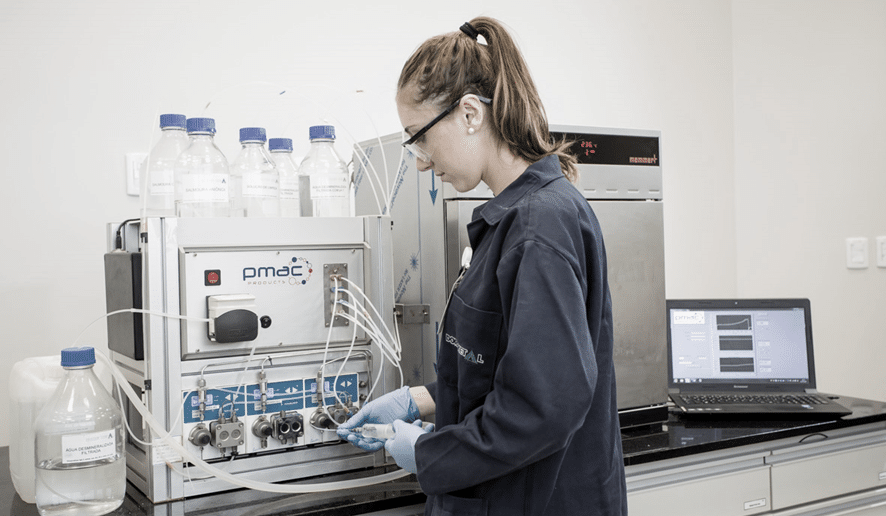
3. Specialized Laboratory: Our Research and Development Center is equipped to perform advanced analyses of liquid and solid materials, enabling reverse engineering to diagnose the root causes of corrosion and fouling problems.
4. Systematic Approach: We employ a structured troubleshooting methodology involving root-cause identification, detailed analysis, and the implementation of robust chemical solutions. This ensures efficient and lasting problem resolution.
5. Advanced Diagnostic Tools: Dorf Ketal employs modern modeling and statistical tools, such as the COMPASS™ platform, used to calculate the polytropic efficiency of charge-gas compressors, among other analyses.
For corrosion diagnosis, the company uses advanced techniques such as electrical resistance corrosion probes, hydrogen permeation cells, and more. Additionally, the COLDSIM™ simulation tool calculates the salt formation temperature—such as nitrogen chloride salts—in distillation tower overhead streams.
6. Field Technical Support: Our field service team is always ready to provide on-site support. With strong local presence, we can respond quickly to any issue, ensuring your plant returns to optimal operation as soon as possible.
Typical problems mitigated by Dorf Ketal with consolidated international success references.
| First-Generation Petrochemical Plants | Problem |
| Pyrolysis Furnaces | Short run length and tube integrity issues |
| HSE restrictions due to DMDS handling | |
| Quench Oil Tower | Fouling on trays |
| Quench Water System | Corrosion in HC stripper and dilution steam generator |
| Fouling in dilution steam boilers | |
| Emulsion formation in quench water tower | |
| Charge Gas Compression System | Phase separation in knockout drums |
| Corrosion in interstage condensers | |
| Fouling in compression stages and condensers | |
| Caustic Tower & Spent Caustic Treatment Unit | Red-oil formation |
| Foaming | |
| Cold Section – DeC2 – DeC3 – DeC4 | Fouling in reboilers and distillation towers |
| Condensate Stripper | Fouling in reboilers and distillation tower |
| Pyrolysis Gasoline Hydrogenation | Fouling in distillation reboilers |
| Corrosion in overhead systems | |
| Oxidative degradation of pygas | |
| Naphtha Fractionation Area | Fouling in reboilers |
| Corrosion in tower overhead systems | |
| Naphtha Desulfurization Unit (FCC Feed) | Corrosion in tower overhead system |
| Butadiene Unit | Fouling in reboilers and distillation towers in extraction and fractionation sections |
| Isoprene Unit | Fouling in reboilers and distillation towers |
| Corrosion caused by CS₂ contamination | |
| ETBE Unit | Corrosion control |
| Oxidative degradation of sulfolane solvent | |
| Aromatics Extraction (BTX) Unit | Foaming in extractive stripper tower |
| Degradação oxidativa do solvente sulfolane | |
| Automotive Gasoline (GAT) Production | Oxidative stability issues and color adjustment for commercialization |
| Naphtha Transfer Pipelines | Corrosion in pipelines |
| Flow restrictions due to infrastructure bottlenecks. |
| Second-Generation Petrochemical Plants | Problem |
| Styrene Production Unit | Polymerization in reboilers and distillation towers |
| Corrosion in compression system | |
| HSE restrictions due to handling of nitrophenolic carcinogenic compounds | |
| Acrylonitrile Production Unit | Foaming in quench tower. |
| Fouling in quench tower. | |
| Detergent Production Unit | Issues related to DMDS handling |
| MVC/PVC Production Unit | Fouling in EDC and MVC reboilers and distillation towers |
| Corrosion in EDC/MVC distillation towers | |
| Hydrogenation of Mineral Oils & Petrolatum Unit | Corrosion in tower overhead systems |
| Deposition of ammonium salts in post-reactor equipment | |
| Issues related to DMDS handling | |
| PE/PP Production Units | Problems related to static charge buildup during polymerization and product storage. |
| SBR Production Unit | Fouling in charge preheaters, reboilers, and distillation towers. |
The above list does not exhaust all the challenges typically encountered in petrochemical plants.
In conclusion, advanced troubleshooting using chemical specialty products is an essential capability for maintaining the efficient and safe operation of petrochemical plants.
Dorf Ketal is the only company in the market that provides products and services from WELL to PUMP and from WELL to PLASTIC across the petroleum derivatives value chain. This unique expertise allows diagnosing root-cause problems originating in the exploration and production phases that may impact downstream hydrocarbon processing units.
_______________________________________
Author
Reinaldo R. Nascimento
Chemical Engineer, Postgraduate (CENPEQ) in Petrochemical Processes