



Introduction
In today’s automotive market, the pursuit of greater efficiency and fuel economy remains a constant priority for both consumers and manufacturers. Dorf Ketal, in partnership with Kinbold (United Kingdom), conducted a study to evaluate the performance of the Milex gasoline additive in an Audi S4 Cabriolet V8 4.2L (model year 2006). The study used E0 gasoline with 98 octane, ensuring test conditions optimized for high-performance applications. This article presents the results of the study, emphasizing the additive’s contribution to fuel savings and its potential impact on urban drivers.
Development
Context and Methodology
The study was conducted under real-world urban driving conditions, reflecting the vehicle’s typical use. The test compared fuel consumption in two scenarios: without the additive and with Milex applied at a dosage of 1 ml per liter of gasoline. The choice of a realistic driving environment provided more representative data than controlled laboratory or track tests.

Study Results
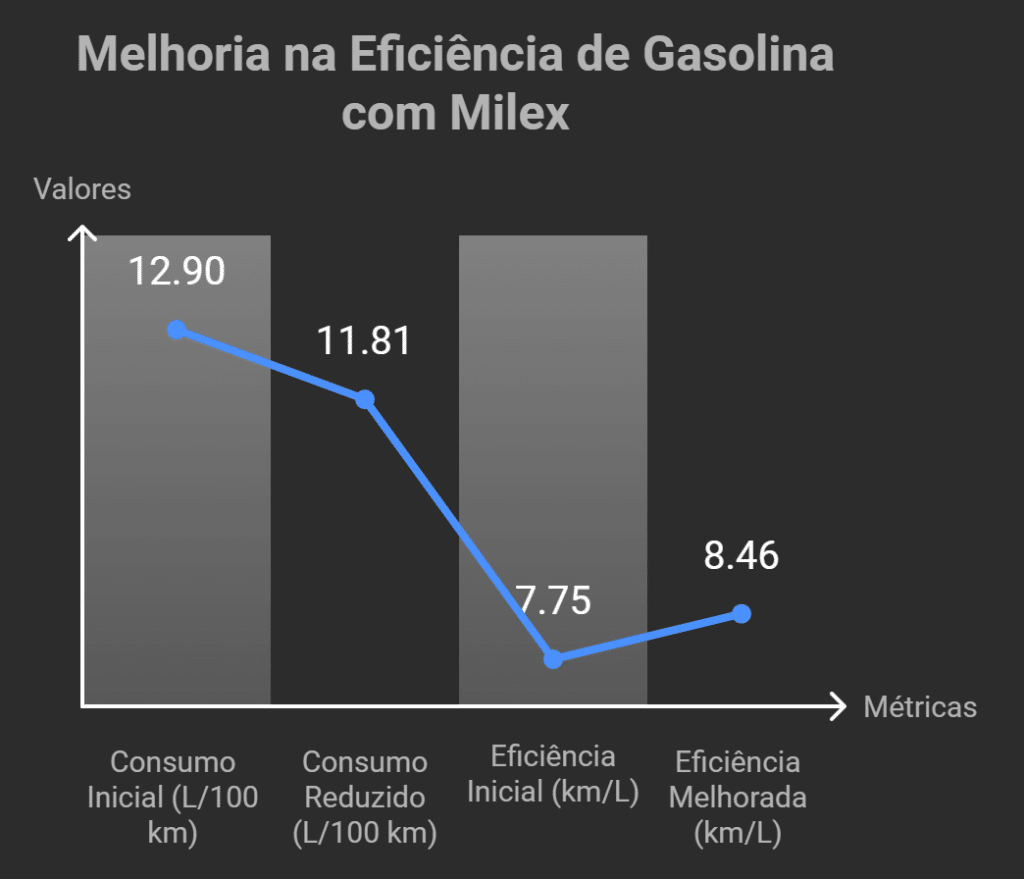
The results revealed a significant reduction in fuel consumption with the use of the Milex additive. The baseline consumption of 12.90 L/100 km (21.90 MPG) decreased to 11.81 L/100 km (23.90 MPG), representing a 9.16% improvement in fuel efficiency. In practical terms, this equates to an increase from 7.75 km/L to 8.46 km/L.
Market Analysis and Future Outlook
The improvement in fuel efficiency not only provides direct financial savings to consumers but also contributes to lower carbon emissions—a critical factor amid growing global environmental concerns. Automotive industry experts highlight that additives like Milex can play a key role in the transition toward more sustainable driving practices.
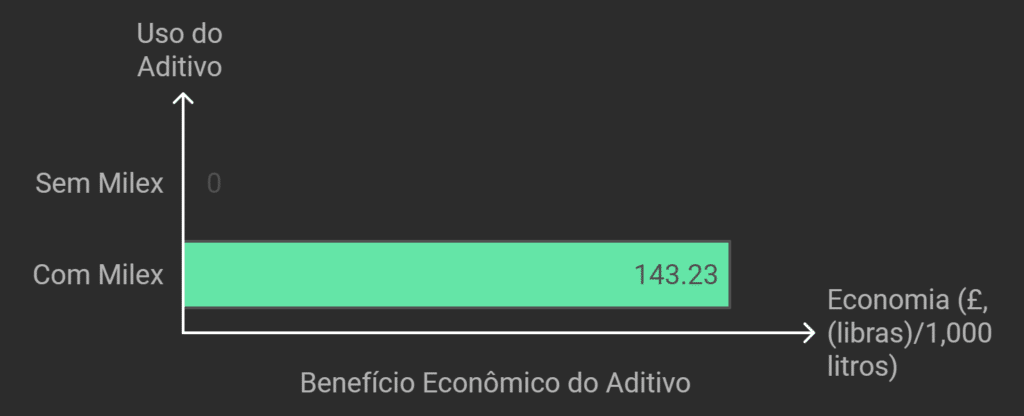
Moreover, the financial analysis of the study suggests a substantial net gain for drivers using the additive, with an estimated savings of £143.23 per 1,000 liters of gasoline. This potential economic benefit represents a strong appeal for cost-conscious consumers and for fleet operators seeking to reduce operating expenses.
Implications for the Automotive Sector
The introduction of efficient gasoline additives can influence automakers’ market strategies, as they may consider partnerships or internal development of similar solutions to offer customers enhanced performance and sustainability. Additionally, the rising demand for more efficient vehicles may stimulate technological innovation and further research into advanced fuel additives.
Conclusion
The study conducted by Dorf Ketal and Kinbold demonstrates the tangible benefits of the Milex additive in improving fuel efficiency and delivering financial savings. For urban drivers—particularly those who frequently travel short distances—the use of additives like Milex can significantly enhance driving experience and cost management. As the automotive sector moves toward more sustainable practices, solutions such as Milex are poised to become essential components in the pursuit of efficiency and reduced environmental impact.
Source: KINBOLD Ltd – 167–169 Great Portland Street, 5th Floor, London, W1W 5PF
milex® is a registered trademark of DORF KETAL