


INDUSTRY CONTEXT
Paper manufacturers know that the stability of the wet end is directly linked to the operability of the paper machine and, therefore, to the quality of the final product. The runnability and stability of the wet end depend on the interactions between fines, fibers, ash, and dissolved and colloidal materials.
With circuit closure and increased use of recycled paper in production, greater variability and negative elevation in the charge demand in the headbox have been observed, making the use of ionic demand control additives increasingly necessary.
THE CHALLENGE
A recycled paper mill located in southeastern Brazil, with a production capacity of approximately 90 tons of paper per day, produces brown papers with grammages ranging from 100 to 180 g/m², using around 2.5 kg/ton of PAC (Polyaluminum Chloride) as an ionic demand control agent. The system demand is approximately –1600 ueq/L.
The client needed to reduce the consumption of this chemical product and, in magnitude, the demand value, in order to improve final paper quality and increase process stability.
THE SOLUTION
Laboratory Evaluation
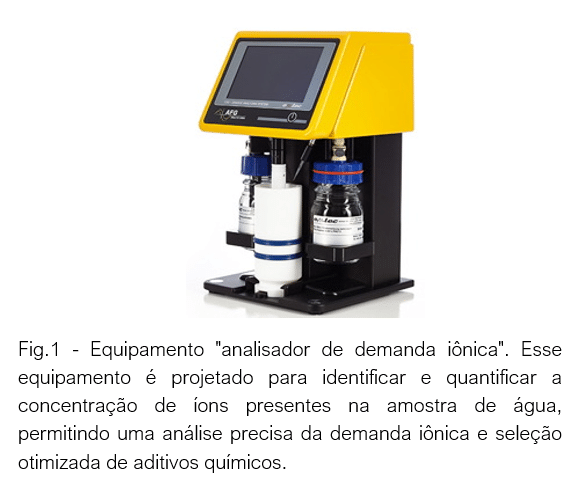
All additives and products added throughout the papermaking process can contribute with either negative or positive charges. The first step was to map the application of all additives used in the process, verifying application points and dosages. Subsequently, a screening was carried out with different types of ionic demand controllers from the IOTRON™ line, comparing them with the PAC used by the client. The sample used was white water from the process.
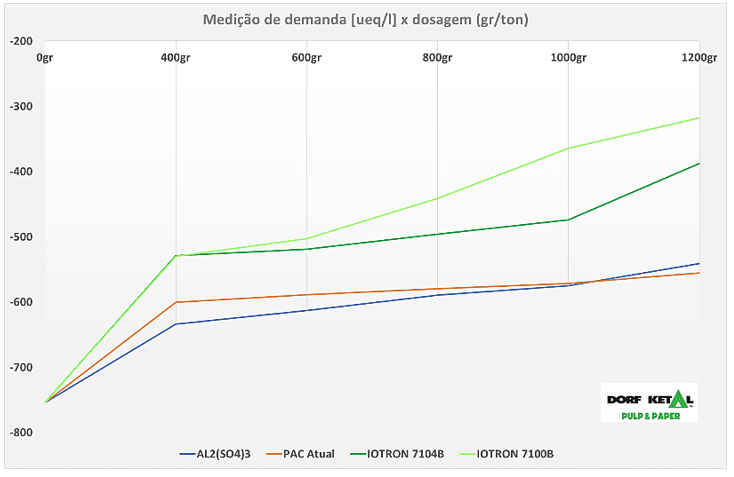
As shown in Graph 1, PAC and aluminum sulfate show a less steep decreasing curve compared to the IOTRON™ 7100B curve. This indicates that the action of IOTRON™ 7100B, an organic coagulant, is faster and more efficient, and requires a lower dosage than the PAC currently used in the process. It was also verified that, beyond a certain dosage, both PAC and aluminum sulfate exhibit a buffering effect in the medium, meaning that further dosage increase does not significantly reduce the demand magnitude — an effect not observed with the IOTRON™ 7100B product.
Based on the positive laboratory results, an industrial test was carried out to evaluate the performance of the IOTRON™ 7100B ionic demand controller in the production process.
RESULTS
Industrial Evaluation
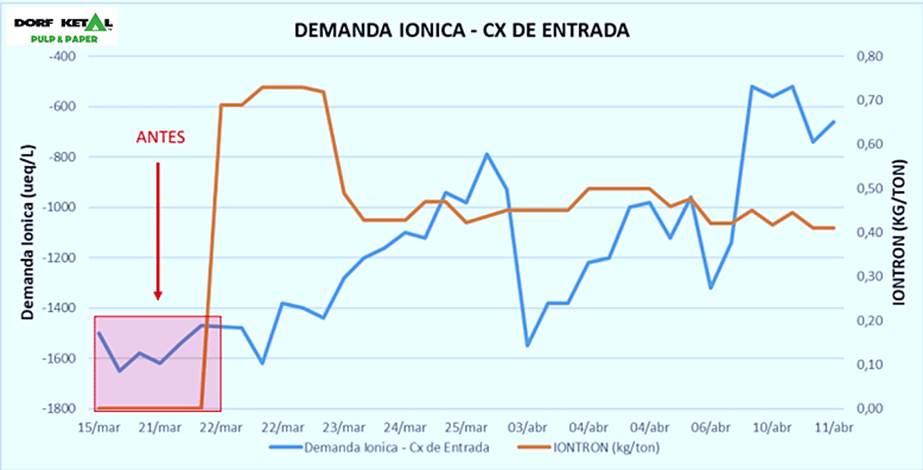
Graph 2 shows a reduction in magnitude of approximately 600 ueq/L when replacing PAC with IOTRON™ 7100B, even when applying a lower dosage than that used with PAC.
CONCLUSIONS
By choosing a customized solution guided by skilled professionals and using innovative chemical technologies, the client achieved:
– Approximately 80% reduction in the ionic demand controller dosage.
– Greater process stability, optimizing chemical consumption.
– Up to 3 percentage points increase in total retention.
Given the positive results and financial gains, the client approved the continuous application of IOTRON™ 7100B as a replacement for PAC.